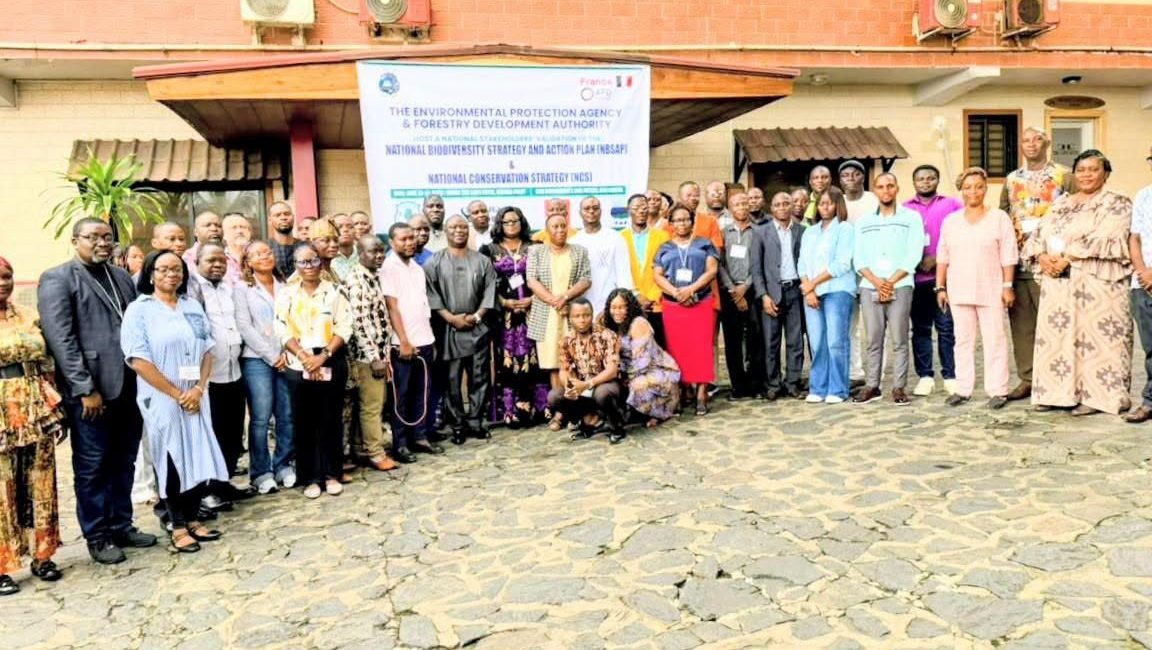

Monrovia, Liberia – June 22, 2026 – Liberia has taken an important step toward protecting its environment and natural resources with the validation of the National Biodiversity Strategy and Action Plan (NBSAP) 2025–2030 and the National Conservation Strategy of Liberia.
The validation workshop was held from June 18–19, 2026, at the Cape Hotel in Mamba Point, Monrovia. It brought together representatives from government ministries and agencies, conservation organizations, development partners, civil society groups, community representatives, and environmental experts to review and endorse the two national documents.
The National Biodiversity Strategy and Action Plan, commonly known as the NBSAP, will guide Liberia’s biodiversity conservation efforts from 2025 to 2030. The plan outlines the actions needed to protect the country’s forests, wildlife, wetlands, and other natural resources while ensuring they continue to support the livelihoods of present and future generations.
Liberia is home to some of West Africa’s most important biodiversity resources. These natural resources provide food, income, clean water, and other benefits to communities across the country. However, they continue to face threats from deforestation, mining, agricultural expansion, climate change, and other human activities.
Participants at the workshop said the validated NBSAP will help Liberia address these challenges by promoting the sustainable use of natural resources, strengthening environmental management, restoring damaged ecosystems, and increasing public awareness about conservation.
The strategy is aligned with the goals of the Convention on Biological Diversity (CBD) and supports the implementation of the Kunming-Montreal Global Biodiversity Framework, which was adopted by countries around the world in Montreal, Canada, in 2022. The global framework aims to halt and reverse biodiversity loss by 2030.
Alongside the NBSAP, stakeholders also validated the National Conservation Strategy, which will serve as Liberia’s roadmap for implementing biodiversity and conservation actions across the country.
The National Conservation Strategy identifies major challenges affecting biodiversity conservation, including activities of extractive industries, unsustainable farming practices, habitat destruction, limited funding, and weak enforcement of environmental laws. The strategy also proposes actions to improve environmental governance, strengthen partnerships, increase community participation, and mobilize resources for conservation programs.
Stakeholders described the validation of the two documents as a major milestone for Liberia’s environmental sector. They noted that the strategies will help guide national efforts to protect biodiversity and ensure that conservation remains a key part of the country’s development agenda.
They stressed that successful implementation will require strong political support, adequate funding, and collaboration among government institutions, development partners, local communities, and other stakeholders.
They further noted that the validation of the NBSAP and National Conservation Strategy places greater responsibility on policymakers to provide the financial and institutional support needed to implement the plans and achieve their goals.
With the validation process completed, Liberia is now better positioned to strengthen the protection of its biodiversity and ecosystems while contributing to global efforts to reverse biodiversity loss by 2030.
Liberia Validates Landmark Biodiversity and Conservation Strategies for 2030