
Monrovia, Liberia – June 23, 2026 – The Government of Liberia, through the Environmental Protection Agency (EPA), has officially commenced a three-day Inception and Technical Training Workshop for the Liberia 2026 National Reporting Process under the United Nations Convention to Combat Desertification (UNCCD).
The workshop, being held at the University of Liberia Climate Action Laboratory, has brought together representatives from government ministries and agencies, development partners, academia, civil society organizations, the media, women and youth groups, and other stakeholders to strengthen Liberia’s capacity to prepare its 2026 national report while enhancing collaboration on sustainable land management and environmental governance.
Officially opening the workshop, EPA Executive Director Dr. Emmanuel K. Urey Yarkpawolo described the launch of the national reporting process as a significant milestone in Liberia’s efforts to combat land degradation and build climate resilience.
He stressed that while the reporting exercise fulfills Liberia’s obligations under the UNCCD, it is much more than an international requirement.
“This is not only a reporting obligation under the UNCCD. It is also a strategic opportunity for Liberia to assess the condition of our land resources, strengthen our data systems, improve coordination among institutions, and demonstrate our commitment to addressing land degradation, drought, and desertification,” Dr. Yarkpawolo said.
Liberia ratified the United Nations Convention to Combat Desertification in 1998 and is required to periodically submit national reports detailing measures taken to address desertification, land degradation, and drought.
According to Dr. Yarkpawolo, although Liberia experiences limited desertification, land degradation has become one of the country’s most pressing environmental challenges.
He noted that degraded land threatens agriculture, forests, wetlands, water resources, biodiversity, infrastructure, and the livelihoods of thousands of Liberians while increasing communities’ vulnerability to climate change.
“When land is degraded, agriculture suffers, forests are threatened, wetlands are lost, water sources are weakened, and vulnerable communities become more exposed to climate shocks. Addressing land degradation is not only an environmental issue—it is a national development priority,” he emphasized.
The EPA Executive Director explained that productive land remains central to Liberia’s economic growth, food security, infrastructure development, public health, education, tourism, and the country’s broader development agenda.
He said the 2026 reporting process should therefore be treated as a national exercise requiring the active participation of every relevant institution.
Over the three-day workshop, participants will receive technical training on the UNCCD reporting framework, Land Degradation Neutrality (LDN), Sustainable Development Goal Indicator 15.3.1, drought assessment methodologies, land cover and land productivity monitoring, national data validation, stakeholder coordination mechanisms, and the use of the PRAIS4 reporting platform.
Dr. Yarkpawolo emphasized that the data generated through the exercise must be credible, nationally validated, and capable of informing government policy, planning, investment decisions, restoration initiatives, and climate resilience programs.
He called on institutions including the Liberia Land Authority, Forestry Development Authority, Ministry of Agriculture, Ministry of Mines and Energy, Ministry of Finance and Development Planning, National Disaster Management Agency, Ministry of Gender, Ministry of Internal Affairs, local governments, civil society organizations, the private sector, and the media to fully support the process by providing quality data, addressing information gaps, and strengthening institutional coordination.
He also stressed the importance of ensuring that women, youth, farmers, forest-dependent communities, and rural households play meaningful roles in the reporting process so that their experiences and perspectives help shape national solutions.
During his remarks, Dr. Yarkpawolo raised serious concerns over the increasing use of excavators and dredges in artisanal and small-scale mining operations across Liberia, describing the machines as major drivers of land degradation and water pollution.
He called on the Government of Liberia to institute stricter regulations governing the importation, ownership, movement, and use of excavators and dredges.
According to him, introducing tracking systems, including GPS monitoring of heavy equipment, would significantly improve government oversight and help reduce illegal mining activities that continue to destroy forests, rivers, and agricultural lands.
The EPA Executive Director disclosed that discussions have already begun with environmental authorities in Ghana and Côte d’Ivoire to establish a trilateral collaboration aimed at combating illegal mining and restoring degraded ecosystems across the region.
He warned that unless stronger regulatory measures are introduced, environmental degradation could worsen and further threaten the health, livelihoods, and future of rural communities.
Speaking on behalf of the Ministry of Foreign Affairs, Assistant Minister for International Organizations Daniel Koikoi reaffirmed Liberia’s commitment to international environmental cooperation and responsible multilateral engagement.
He noted that Liberia’s participation in the UNCCD reflects the country’s determination to fulfill its treaty obligations while strengthening international partnerships for sustainable land management.
Min. Koikoi said the 2026 reporting process presents an opportunity to improve national coordination, attract technical assistance and investment, and provide credible evidence that supports Liberia’s environmental diplomacy and sustainable development agenda.
Representing the Forestry Development Authority (FDA), John S. McKay Jr., Technical Manager for the Department of Forest Carbon Harvesting, Trade and Regulations, described land degradation as one of Liberia’s fastest-growing environmental threats.
Although Liberia has not experienced widespread desertification, he warned that rapid forest loss, illegal mining, polluted waterways, and unsustainable land use practices are significantly degrading the country’s natural resources.
McKay stressed that sustainable land management requires the full participation of government institutions, local communities, and development partners, adding that environmental reporting should never become merely a paperwork exercise but rather a tool for guiding practical action.
The Ministry of Finance and Development Planning also pledged its support for the initiative, noting that environmental information generated through the reporting process will strengthen national planning, budgeting, climate finance mobilization, and sustainable development programming.
Speaking on behalf of the National Disaster Management Agency (NDMA), Head of Legal Affairs Attorney Ellen Ziah-Nimley welcomed the national approach being adopted for the 2026 reporting cycle.
She said Liberia has consistently met its reporting obligations under the UNCCD but expressed satisfaction that the current process now brings together a wider range of national stakeholders.
According to her, environmental degradation, especially from mining and land misuse, continues to increase disaster risks across Liberia, making stronger collaboration essential.
Meanwhile, Press Union of Liberia President Julius Kanubah applauded the EPA for including the media in the national reporting process.
Kanubah said journalists have a critical role to play in increasing public awareness about land degradation and environmental protection.
He encouraged the EPA to continuously engage the media by providing information on environmental hotspots across Liberia to improve public understanding of the country’s environmental challenges.
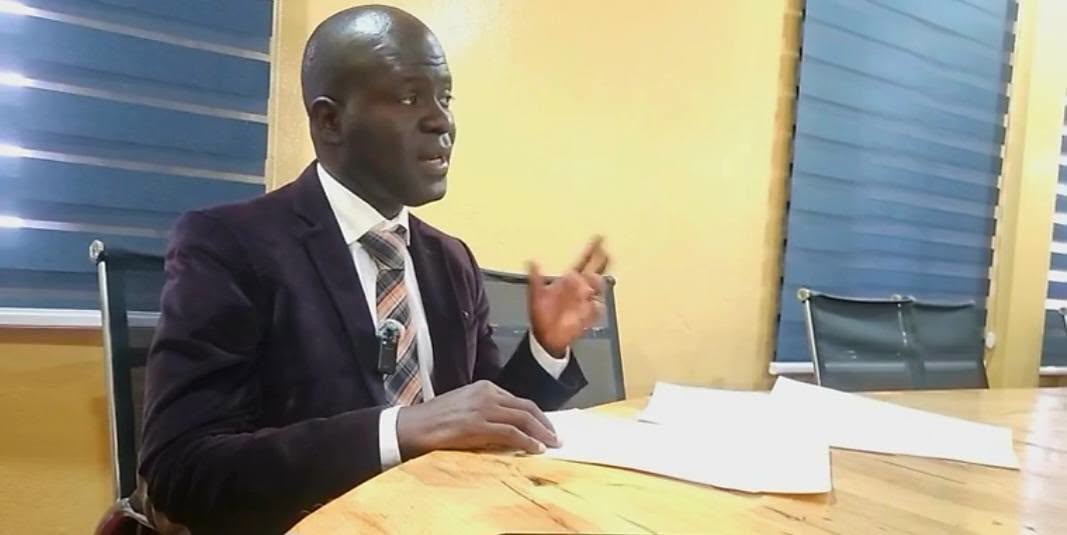
Providing an overview of the workshop, Mr. Berexford S. Jallah, Liberia’s National Focal Point for the United Nations Convention to Combat Desertification (UNCCD), said the three-day training is designed to equip participating institutions with the technical knowledge and practical tools required to prepare Liberia’s 2026 National Report in accordance with UNCCD reporting guidelines. He explained that participants will receive hands-on training on the PRAIS4 reporting platform, land degradation neutrality indicators, drought assessment, data validation, and institutional coordination to ensure the country’s report is scientifically sound and nationally owned.
Mr. Jallah also provided a brief history of the UNCCD, noting that the Convention was adopted in 1994 following the Rio Earth Summit as the only legally binding international agreement dedicated to combating desertification, land degradation, and the effects of drought.
He reminded participants that Liberia ratified the Convention in 1998 and has since remained committed to fulfilling its reporting obligations while promoting sustainable land management and ecosystem restoration.
The three-day workshop is expected to conclude with a comprehensive roadmap for Liberia’s 2026 UNCCD National Report, outlining institutional responsibilities, technical priorities, data collection strategies, validation mechanisms, and timelines for submission.