
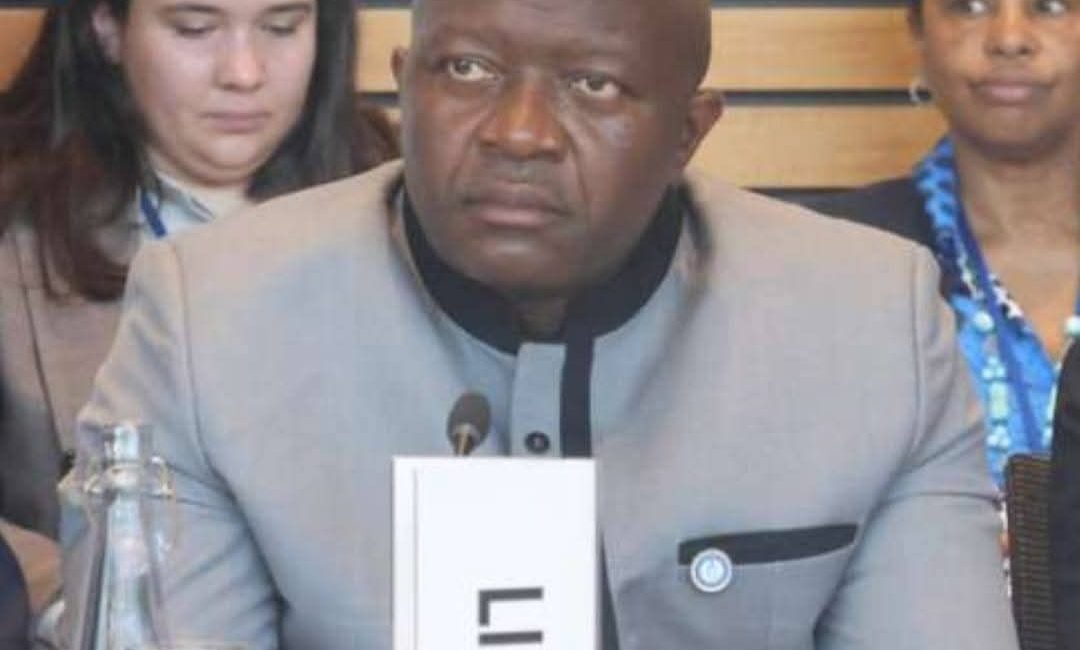
Washington, D.C, April 17, 2026 — Liberia’s Minister of Finance and Development Planning, Augustine Kpehe Ngafuan, has outlined the country’s long-term climate vision and development strategy at the World Bank/IMF Spring Meetings, emphasizing both urgent climate vulnerability and ambitious national reform efforts.
Speaking at the 15th Ministerial Meeting of the Coalition of Finance Ministers for Climate Action held on the margins of the annual gathering in Washington, D.C. on Wednesday, April 15, 2026, Minister Ngafuan positioned Liberia as a low-emitting but highly climate-vulnerable nation seeking stronger global partnership and fair financing mechanisms.
He noted that Liberia continues to face serious environmental threats, including rising sea levels, coastal erosion, and shifting rainfall patterns that are already disrupting agriculture, infrastructure, and livelihoods. With nearly 60 percent of the population living along coastal areas, he warned that extreme weather events pose a significant risk to homes, businesses, and national stability.
Despite these challenges, Minister Ngafuan emphasized that Liberia has remained committed to global climate action. He recalled the country’s early support for the Paris Agreement and ongoing efforts to protect and sustainably manage its forest resources, which form part of the Upper Guinean rainforest system, one of the world’s most important carbon sinks.
A central highlight of his address was Liberia’s updated Nationally Determined Contributions (NDC 3.0), which sets an ambitious target of a 64 percent reduction in greenhouse gas emissions by 2035 compared to business-as-usual levels, alongside a long-term pathway toward net-zero emissions by 2050.
The Minister explained that the revised NDC is not only a climate document but also a national development blueprint. He said, it integrates key sectors such as energy transition, agriculture and food systems, forestry and land use, transport, waste management, and public health resilience.
“Our aim is to ensure that climate action drives growth, creates jobs, and reduces poverty,” he said.
Minister Ngafuan highlighted ongoing national initiatives, including the expansion of climate-smart agriculture to improve food security, renewable energy investments to reduce dependence on biomass, and coastal protection interventions in vulnerable communities such as West Point and Greenville. These interventions, according to him, combine nature-based solutions with resilient infrastructure designed to safeguard lives and property.
He also stressed Liberia’s commitment to inclusive climate governance, noting the increasing involvement of women, youth, and local communities in planning and decision-making processes.
However, he cautioned that implementation of Liberia’s climate agenda remains heavily dependent on external financing. He disclosed that more than 80 percent of mitigation targets and a significant portion of adaptation efforts rely on international support.
“Climate change poses a real macro-fiscal risk to Liberia,” Minister Ngafuan warned, adding that without urgent action, it could slow economic growth, widen inequality, and deepen poverty.
Minister Ngafuan further pointed to structural challenges such as limited fiscal space, weak data systems, and monitoring constraints, which continue to affect implementation capacity. He also acknowledged that economic expansion in sectors such as mining and agriculture presents environmental risks if not managed sustainably.
In his appeal to development partners, the Minister called for predictable, adequate, and accessible climate finance. He emphasized the need for increased adaptation funding, particularly for coastal defense, resilient infrastructure, and climate-smart agriculture.
He further urged stronger international cooperation in supporting forest conservation efforts, describing Liberia’s forests as a “global public good” that requires fair and sustained compensation, including improved access to carbon markets under Article 6 of the Paris framework.
Minister Ngafuan also called for deeper collaboration with multilateral institutions, including the World Bank and the International Monetary Fund, to expand concessional financing, support debt-for-climate solutions, and strengthen early warning systems and institutional capacity.
He urged global partners to support Liberia’s climate journey in a spirit of solidarity and shared responsibility.
“Liberia is doing its part. We ask the world to walk this path with us,” he said.
His remarks come as developing nations continue to press for greater equity in global cliMinister Ngafuan Outlines Liberia’s Climate Vision at World Bank/IMF Spring Meetings in Washington DC
Washington, D.C, April 16, 2026 — Liberia’s Minister of Finance and Development Planning, Augustine Kpehe Ngafuan, has outlined the country’s long-term climate vision and development strategy at the World Bank/IMF Spring Meetings, emphasizing both urgent climate vulnerability and ambitious national reform efforts.
Speaking at the 15th Ministerial Meeting of the Coalition of Finance Ministers for Climate Action held on the margins of the annual gathering in Washington, D.C. Wednesday, April 15, 2026, Minister Ngafuan positioned Liberia as a low-emitting but highly climate-vulnerable nation seeking stronger global partnership and fair financing mechanisms.
He noted that Liberia continues to face serious environmental threats, including rising sea levels, coastal erosion, and shifting rainfall patterns that are already disrupting agriculture, infrastructure, and livelihoods. With nearly 60 percent of the population living along coastal areas, he warned that extreme weather events pose a significant risk to homes, businesses, and national stability.
Despite these challenges, Minister Ngafuan emphasized that Liberia has remained committed to global climate action. He recalled the country’s early support for the Paris Agreement and ongoing efforts to protect and sustainably manage its forest resources, which form part of the Upper Guinean rainforest system, one of the world’s most important carbon sinks.
A central highlight of his address was Liberia’s updated Nationally Determined Contributions (NDC 3.0), which sets an ambitious target of a 64 percent reduction in greenhouse gas emissions by 2035 compared to business-as-usual levels, alongside a long-term pathway toward net-zero emissions by 2050.
The Minister explained that the revised NDC is not only a climate document but also a national development blueprint. He said, it integrates key sectors such as energy transition, agriculture and food systems, forestry and land use, transport, waste management, and public health resilience.
“Our aim is to ensure that climate action drives growth, creates jobs, and reduces poverty,” he said.
Minister Ngafuan highlighted ongoing national initiatives, including the expansion of climate-smart agriculture to improve food security, renewable energy investments to reduce dependence on biomass, and coastal protection interventions in vulnerable communities such as West Point and Greenville. These interventions, according to him, combine nature-based solutions with resilient infrastructure designed to safeguard lives and property.
He also stressed Liberia’s commitment to inclusive climate governance, noting the increasing involvement of women, youth, and local communities in planning and decision-making processes.
However, he cautioned that implementation of Liberia’s climate agenda remains heavily dependent on external financing. He disclosed that more than 80 percent of mitigation targets and a significant portion of adaptation efforts rely on international support.
“Climate change poses a real macro-fiscal risk to Liberia,” Minister Ngafuan warned, adding that without urgent action, it could slow economic growth, widen inequality, and deepen poverty.
Minister Ngafuan further pointed to structural challenges such as limited fiscal space, weak data systems, and monitoring constraints, which continue to affect implementation capacity. He also acknowledged that economic expansion in sectors such as mining and agriculture presents environmental risks if not managed sustainably.
In his appeal to development partners, the Minister called for predictable, adequate, and accessible climate finance. He emphasized the need for increased adaptation funding, particularly for coastal defense, resilient infrastructure, and climate-smart agriculture.
He further urged stronger international cooperation in supporting forest conservation efforts, describing Liberia’s forests as a “global public good” that requires fair and sustained compensation, including improved access to carbon markets under Article 6 of the Paris framework.
Minister Ngafuan also called for deeper collaboration with multilateral institutions, including the World Bank and the International Monetary Fund, to expand concessional financing, support debt-for-climate solutions, and strengthen early warning systems and institutional capacity.
He urged global partners to support Liberia’s climate journey in a spirit of solidarity and shared responsibility.
“Liberia is doing its part. We ask the world to walk this path with us,” he said.
His remarks come as developing nations continue to press for greater equity in global climate financing, particularly for countries facing severe climate risks despite contributing minimally to global emissions.mate financing, particularly for countries facing severe climate risks despite contributing minimally to global emissions.