
The Environmental Protection Agency (EPA) of Liberia has reaffirmed its commitment to transforming the country’s transport sector through the implementation and enforcement of cleaner fuel and vehicle emission standards aimed at improving air quality, protecting public health,
and supporting national climate ambitions.
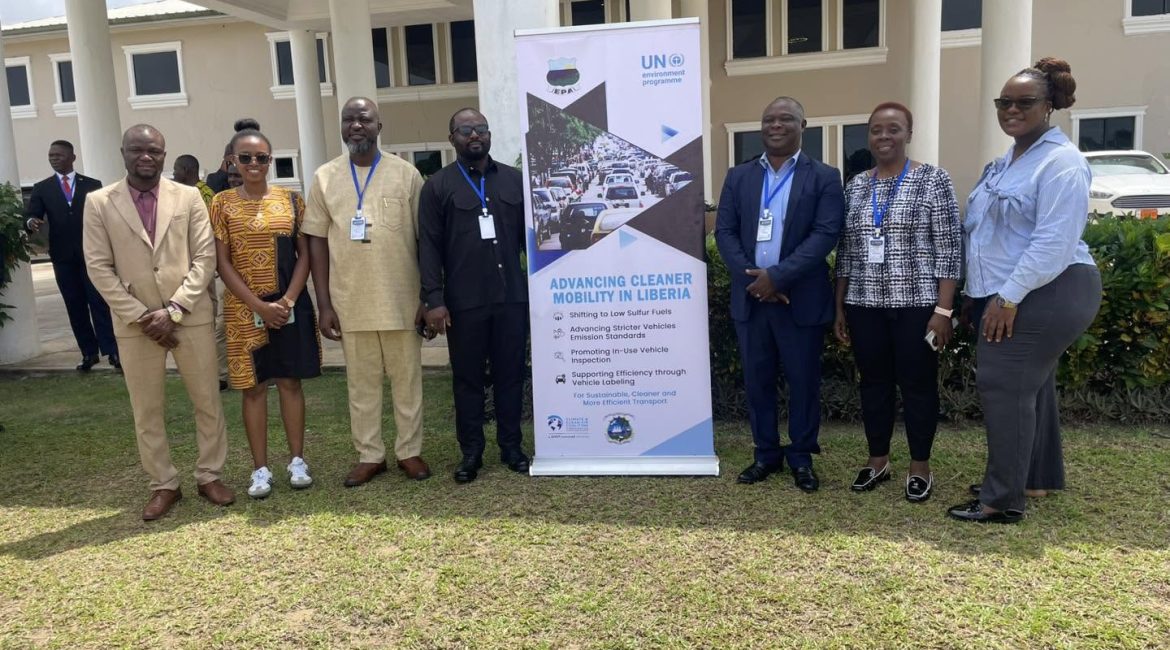
Addressing participants at the National Dissemination Workshop on Promoting Cleaner Fuels and Vehicle Strategies in Liberia at the Royal Ambassador Hotel in Margibi County, the Deputy Executive Director for Administration, Hon. Anthony S. Kollie, underscored the growing environmental and health concerns associated with aging vehicles and poor fuel quality. He noted that the rapid expansion of Liberia’s vehicle fleet, coupled with the continued importation of high-emitting vehicles and fuels, presents significant challenges to the country’s sustainable development and climate objectives.
Supported by the Climate and Clean Air Coalition (CCAC) and implemented with technical assistance from the United Nations Environment Programme (UNEP), the initiative has produced a comprehensive assessment of Liberia’s fuel quality and vehicle efficiency landscape. The assessment provides critical evidence and strategic recommendations to guide policy reforms, strengthen regulatory frameworks, enhance compliance monitoring and support the adoption of cleaner transport solutions nationwide.
Hon. Kollie emphasized that the EPA will work closely with key government institutions, private sector actors, transport unions, civil society organizations and development partners to ensure that the findings are translated into practical and enforceable measures. These efforts will include public awareness campaigns, institutional capacity strengthening, stakeholder engagement, and robust enforcement mechanisms to curb the importation and use of substandard fuels and vehicles.
The workshop marked a pivotal step in Liberia’s transition toward a cleaner, more efficient and climate-resilient transport sector; one that advances sustainable mobility, reduces harmful emissions and contributes meaningfully to the country’s Nationally Determined Contribution (NDC) targets by 2035.